ChatGPT, Claude, and Cursor: Why Kids Still Need to Learn Coding in the AI Era?
Generative AI tools like ChatGPT, Claude, and Cursor can write code in seconds, but here is why fundamental STEM and robotics skills are more crucial for kids than ever before.
Apr 30, 2026
The Elephant in the Room: Is Coding Dead?
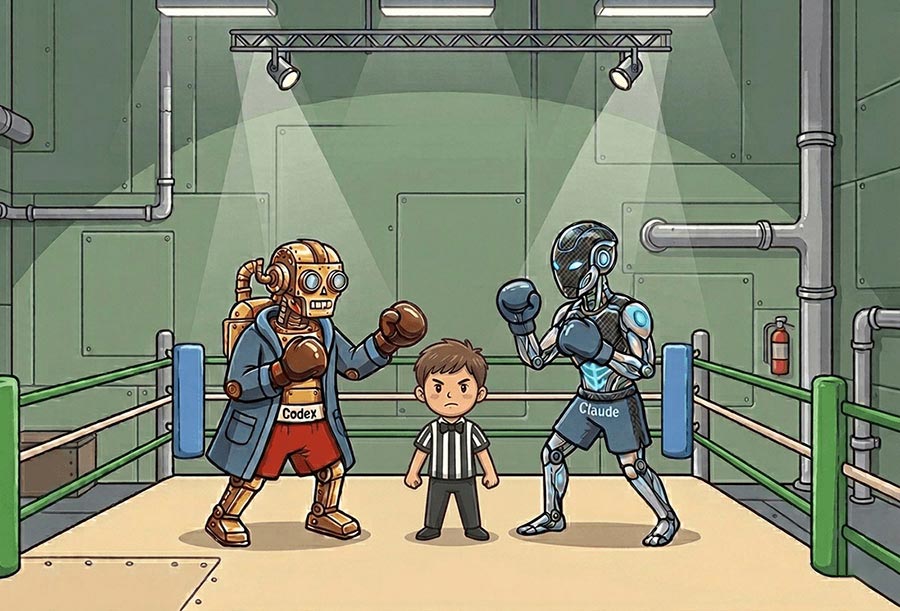
It is the question on the mind of almost every parent navigating the fast-moving tech landscape today. We have all seen the incredible leaps Generative AI has made. With mainstream tools like ChatGPT, Claude, and Gemini churning out complex scripts in seconds, and AI-powered code editors like Cursor and Codex auto-completing entire software builds, it begs a very valid question:
If an AI can do the heavy lifting, why should my child spend years learning the fundamentals of coding and robotics?
It’s tempting to think that the era of learning syntax, debugging, and structural logic is over. But the truth is actually the exact opposite. In a world where anyone can use an AI prompt to generate an app, possessing true, foundational knowledge of how things work is no longer just an advantage — it is a necessity.
The Danger of the "Confident AI"
Generative AI is a revolutionary assistant, but it is not a solo pilot. Anyone who works deeply in software development knows the industry's open secret: AI hallucinates. An AI will confidently write code that looks beautifully structured and perfectly logical to the untrained eye. However, without the fundamental knowledge to examine and audit that output, you are flying blind. Does the AI's code introduce a massive security flaw? Will it break when a thousand users try to log on at once? Does it ignore established industry best practices?
To safely use AI, you have to be smarter than the AI.
When we rely on these tools to build real-world software, we need the expertise to spot their mistakes. If we don't understand the underlying mechanics of what the AI is producing, we aren't engineers—we are just typists hoping for the best.
Why Fundamentals Are the Ultimate Differentiator
Think of AI as a highly advanced power tool. Giving a power saw to someone who doesn't understand carpentry won't magically make them a master builder; it will just help them make mistakes much faster.
In the future workforce, the standard baseline will be "knowing how to prompt an AI." What will set your child apart is what happens after the AI spits out the code:
- Critical Evaluation: Can they read the generated code and immediately spot the logical errors?
- Problem Solving: When the AI’s solution inevitably fails, do they have the grit and knowledge to manually debug the problem?
- Architectural Vision: Can they see the big picture and guide the AI to build something scalable and robust, rather than just a quick, fragile fix?
Having real knowledge is what transforms a user from a passive consumer of AI into an active director of technology.
The Ultimate Reality Check: Why We Build Robots
This is exactly why, at SteamPi, we focus heavily on hands-on physical robotics using tools like VEX.
You cannot bluff a physical robot. If your logic is flawed, the robot won't move. If the code hallucinates a solution that ignores the laws of physics, the robot crashes into the wall. Building and programming tangible robots forces students to confront reality, teaching them the vital skills of testing, failing, iterating, and succeeding.
We take our students from block-based concepts all the way to advanced programming. We aren't just teaching them to memorize code; we are teaching them the critical thinking required to audit technology, recognize best practices, and build safe, reliable solutions from the ground up.
Equip Them for the Real Future
The future doesn't belong to those who let AI do all the thinking. It belongs to those who understand the technology deeply enough to command it, correct it, and elevate it.
Give your child the fundamentals they need to lead in the AI era. Book a trial class or visit our Vancouver academy to see how SteamPi turns curious kids into confident, capable creators.
- AI Era
- Generative AI
- ChatGPT
- Claude
- Gemini
- Cursor
- Codex
- AI Coding Tools
- AI Code Generation
- Coding For Kids
- Learn To Code
- STEM Education
- Robotics Education
- AI Literacy
- Computational Thinking
- Problem Solving
- Critical Thinking
- Debugging Skills
- Software Engineering
- Coding Fundamentals
- Programming Basics
- Block-Based Coding
- Robotics For Kids
- VEX Robotics
- Hands-On Learning
- Project-Based Learning
- Tech Education
- Future-Ready Skills
- Digital Literacy
- STEM For Kids
- Vancouver Coding Academy
- After-School Programs
- AI Safety
- AI Hallucination
- Best Practices
- Engineering Mindset
- Logic And Reasoning
- AI Coding Education
- Prompt Engineering Basics
- Code Literacy
- AI Ethics
- Human In The Loop
- Software Debugging